Tuesday, January 17, 2023
Pope Francis Explains Freedom From Attachments and Applies It to Priests and Parents - ZENIT - English
Pope Francis Explains Freedom From Attachments and Applies It to Priests and Parents - ZENIT - English: “Black World” magazine interviews Pope Francis about Africa.

Saturday, January 14, 2023
The Call to the Apostolate: The Pope’s First Catechesis on Apostolic Zeal - ZENIT - English
The Call to the Apostolate: The Pope’s First Catechesis on Apostolic Zeal - ZENIT - English: The Holy Father’s General Audience on Wednesday, January 11, on “The Passion for Evangelization: The Believer’s Apostolic Zeal. The Call to the Apostolate (Matthew 9:9-13)”
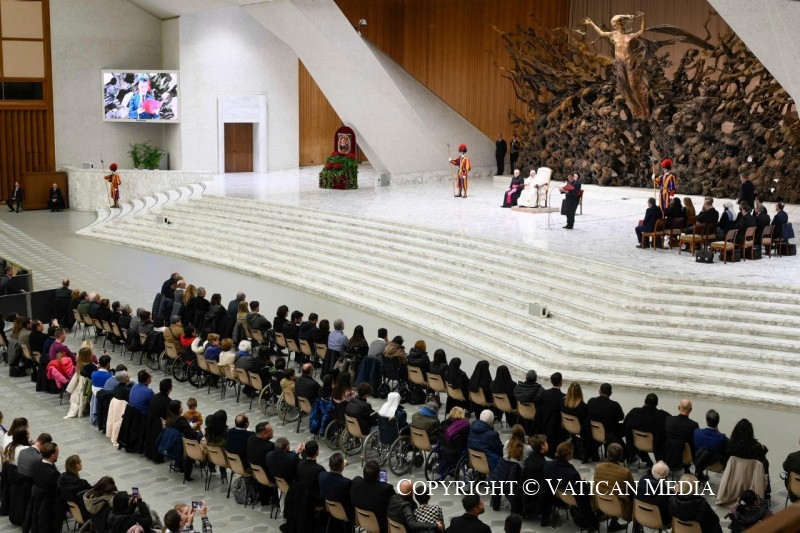
(ZENIT News / Vatican City, 11.01.2023).- On Wednesday, January 11, the Pope began a new series of catecheses focused on the passion for evangelization. The catechesis was held in Paul VI Hall.
Here is the text in English with phrases and headers in bold added by ZENIT.
* * *
Today we begin a new cycle of catechesis, dedicated to an urgent and decisive theme for Christian life: the passion for evangelisation, that is, apostolic zeal. It is a vital dimension for the Church: the community of Jesus’ disciples is in fact born apostolic, born missionary, not proselytizing. And from the start we have to distinguish: being missionary, being apostolic, evangelizing, is not the same as proselytizing, they have nothing to do with one another. It concerns a vital dimension for the Church. The community of the disciples of Jesus is born apostolic and missionary. The Holy Spirit moulds it outwardly — the Church moves out, that goes out — so that it is not closed in on itself, but turned outward, a contagious witness of Jesus — the faith is also contagious — reaching out to radiate His light to the ends of the earth. It can happen, however, that the apostolic ardour, the desire to reach others with the good news of the Gospel, diminishes, becomes tepid. Sometimes it seems to be eclipsed; there are “closed-off” Christians, they don’t think of others. But when Christian life loses sight of the horizon of evangelization, horizon of proclamation, it grows sick: it closes in on itself, becomes self-referential, it becomes atrophied. Without apostolic zeal, faith withers. Mission, on the other hand, is the oxygen of Christian life: it invigorates and purifies it. Let us embark, then, on a process of rediscovering the evangelising passion, starting with the Scriptures and the Church’s teaching, to draw apostolic zeal from its sources. Then we will approach some living sources, some witnesses who have rekindled within the Church the passion for the Gospel, so that they may help us to rekindle the fire that the Holy Spirit wants to keep burning within us.
And today I would like to begin with a somewhat emblematic Gospel episode; we [just] heard it, the call of the Apostle Matthew. And he himself tells the story in his Gospel, which we have heard (cf. 9:9-13).
[Jesus’ Gaze Fixes on People’s Nouns, Not Their Adjectives]
It all begins with Jesus, who, the text says, “sees a man.” Few people saw Matthew as he was: they knew him as the one who was “sitting at the tax booth” (v. 9). He was, in fact, a tax collector: that is, someone who collected taxes on behalf of the Roman empire that occupied Palestine. In other words, he was a collaborator, a traitor to the people. We can imagine the contempt the people felt for him: he was a “publican,” as they were called. But in the eyes of Jesus, Matthew is a man, with both his miseries and his greatness. Be aware of this: Jesus does not stop at the adjective — Jesus always seeks out the noun. “This person is a sinner, he’s that kind of person…” these are adjectives: Jesus goes to the person, to the heart, “This is a person, this is a man, this is a woman.” Jesus goes to the subject, the noun, never the adjective, He leaves aside the adjectives. And while there is distance between Matthew and his people — because they see the adjective, “publican” — Jesus draws near to Him, because every man is loved by God. “Even this wretch?” Yes, even this wretch. Indeed, the Gospel says He came for this very wretch: “I have come for sinners, not for the righteous.” This gaze of Jesus is really beautiful. It sees the other, whoever he may be, as the recipient of love, is the beginning of the evangelising passion. Everything starts from this gaze, which we learn from Jesus.
[How Do We Look Upon Others?]
We can ask ourselves: how do we look upon others? How often do we see their faults and not their needs; how often do we label people according to what they do or what they think! Even as Christians we say to ourselves: is he one of us or not? This is not the gaze of Jesus: He always looks at each person with mercy and indeed with predilection. And Christians are called to do as Christ did, looking like Him especially at the so-called “distant ones.” Indeed, Matthew’s account of the call ends with Jesus saying, “I have not come to call the righteous, but sinners” (v. 13). And if any one of us considers themselves righteous, Jesus is far away. He draws near to our limitations, to our miseries, to heal them.
Pope Francis At The General Audience. Photo: Vatican Media
The Call to the Apostolate: The Pope’s First Catechesis on Apostolic Zeal
The Holy Father’s General Audience on Wednesday, January 11, on “The Passion for Evangelization: The Believer’s Apostolic Zeal. The Call to the Apostolate (Matthew 9:9-13)”
(ZENIT News / Vatican City, 11.01.2023).- On Wednesday, January 11, the Pope began a new series of catecheses focused on the passion for evangelization. The catechesis was held in Paul VI Hall.
Here is the text in English with phrases and headers in bold added by ZENIT.
* * *
Today we begin a new cycle of catechesis, dedicated to an urgent and decisive theme for Christian life: the passion for evangelisation, that is, apostolic zeal. It is a vital dimension for the Church: the community of Jesus’ disciples is in fact born apostolic, born missionary, not proselytizing. And from the start we have to distinguish: being missionary, being apostolic, evangelizing, is not the same as proselytizing, they have nothing to do with one another. It concerns a vital dimension for the Church. The community of the disciples of Jesus is born apostolic and missionary. The Holy Spirit moulds it outwardly — the Church moves out, that goes out — so that it is not closed in on itself, but turned outward, a contagious witness of Jesus — the faith is also contagious — reaching out to radiate His light to the ends of the earth. It can happen, however, that the apostolic ardour, the desire to reach others with the good news of the Gospel, diminishes, becomes tepid. Sometimes it seems to be eclipsed; there are “closed-off” Christians, they don’t think of others. But when Christian life loses sight of the horizon of evangelization, horizon of proclamation, it grows sick: it closes in on itself, becomes self-referential, it becomes atrophied. Without apostolic zeal, faith withers. Mission, on the other hand, is the oxygen of Christian life: it invigorates and purifies it. Let us embark, then, on a process of rediscovering the evangelising passion, starting with the Scriptures and the Church’s teaching, to draw apostolic zeal from its sources. Then we will approach some living sources, some witnesses who have rekindled within the Church the passion for the Gospel, so that they may help us to rekindle the fire that the Holy Spirit wants to keep burning within us.

And today I would like to begin with a somewhat emblematic Gospel episode; we [just] heard it, the call of the Apostle Matthew. And he himself tells the story in his Gospel, which we have heard (cf. 9:9-13).
[Jesus’ Gaze Fixes on People’s Nouns, Not Their Adjectives]
It all begins with Jesus, who, the text says, “sees a man.” Few people saw Matthew as he was: they knew him as the one who was “sitting at the tax booth” (v. 9). He was, in fact, a tax collector: that is, someone who collected taxes on behalf of the Roman empire that occupied Palestine. In other words, he was a collaborator, a traitor to the people. We can imagine the contempt the people felt for him: he was a “publican,” as they were called. But in the eyes of Jesus, Matthew is a man, with both his miseries and his greatness. Be aware of this: Jesus does not stop at the adjective — Jesus always seeks out the noun. “This person is a sinner, he’s that kind of person…” these are adjectives: Jesus goes to the person, to the heart, “This is a person, this is a man, this is a woman.” Jesus goes to the subject, the noun, never the adjective, He leaves aside the adjectives. And while there is distance between Matthew and his people — because they see the adjective, “publican” — Jesus draws near to Him, because every man is loved by God. “Even this wretch?” Yes, even this wretch. Indeed, the Gospel says He came for this very wretch: “I have come for sinners, not for the righteous.” This gaze of Jesus is really beautiful. It sees the other, whoever he may be, as the recipient of love, is the beginning of the evangelising passion. Everything starts from this gaze, which we learn from Jesus.
[How Do We Look Upon Others?]
We can ask ourselves: how do we look upon others? How often do we see their faults and not their needs; how often do we label people according to what they do or what they think! Even as Christians we say to ourselves: is he one of us or not? This is not the gaze of Jesus: He always looks at each person with mercy and indeed with predilection. And Christians are called to do as Christ did, looking like Him especially at the so-called “distant ones.” Indeed, Matthew’s account of the call ends with Jesus saying, “I have not come to call the righteous, but sinners” (v. 13). And if any one of us considers themselves righteous, Jesus is far away. He draws near to our limitations, to our miseries, to heal them.
[It All Starts with Jesus’ Gaze]
It all starts, then, with the gaze of Jesus. “He sees a man,” Matthew. This is followed – second step — by a movement. First the gaze: Jesus sees. Second, movement. Matthew was sitting at the tax office; Jesus said to him: “Follow me.” And “ he rose and followed Him” (v. 9). We note that the text emphasises that “he rose.” Why is this detail so important? Because in those days he who was seated had authority over the others, who stood before him to listen to him or, as in that case, to pay tribute. He who sat, in short, had power. The first thing Jesus does is to detach Matthew from power: from sitting to receive others, He sets him in motion towards others, not receiving, no: he goes out to others. He makes him leave a position of supremacy in order to put him on an equal footing with his brothers and sisters and open to him the horizons of service. This is what Christ does, and this is fundamental for Christians: do we disciples of Jesus, we Church, sit around waiting for people to come, or do we know how to get up, to set out with others, to seek others? Saying, “But let them come to me, I am here, let them come,” is a non-Christian position. No, you go to seek them out, you take the first step.
[The Goal]
A look — Jesus sees; a movement — “he rose”; and third, a destination. After getting up and following Jesus, where will Matthew go? We might imagine that, having changed the man’s life, the Master would lead him to new encounters, new spiritual experiences. No, or at least not immediately. First, Jesus goes to his home; there Matthew prepares “a great feast” for Him, in which “a large crowd of tax collectors” — that is, people like him — takes part (Luke 5:29). Matthew returns to his environment, but he returns there changed and with Jesus. His apostolic zeal does not begin in a new, pure, place, an ideal place, far away, but instead he begins there where he lives, with the people he knows. Here is the message for us: we do not have to wait until we are perfect and have come a long way following Jesus to bear witness to Him, no. Our proclamation begins today, there where we live.
And it does not begin by trying to convince others, no, not to convince: by bearing every day to the beauty of the Love that has looked upon us and lifted us up. And it is this beauty, communicating this beauty that will convince people — not communicating ourselves but the Lord Himself. We are the ones who proclaim the Lord, we don’t proclaim ourselves, we don’t proclaim a political party, an ideology. No: we proclaim Jesus. We need to put Jesus in contact with the people, without convincing them but allowing the Lord do the convincing. For as Pope Benedict taught us, “The Church does not engage in proselytism. Instead, she grows by ‘attraction’” (Homily at the Opening Mass of the 5th General Conference of the Latin American Episcopate and of the Caribbean, Aparecida, May 13, 2007).
Don’t forget this: when you see Christians proselytising, making a list of people to come. . . these are not Christians, they are pagans disguised as Christians, but the heart is pagan. The Church grows not by proselytism, it grows by attraction.
I remember once, in a hospital in Buenos Aires, the women religious who worked there left because they were too few, and they couldn’t run the hospital. And a community of sisters from Korea came. And they arrived, let’s say on a Monday for example (I don’t remember the day). They took possession of the Sisters’ house in the hospital and on Tuesday they came down to visit the sick in the hospital, but they didn’t speak a word of Spanish. They only spoke Korean and the patients were happy, because they commented: “Well done! These nuns, bravo, bravo!” “But what did the Sister say to you?” “Nothing, but with her gaze she spoke to me, they communicated Jesus,” not themselves, with their gaze, with their gestures. To communicate Jesus, not ourselves: This is attraction, the opposite of proselytism.
This attractive witness, this joyful witness is the goal to which Jesus leads us with His loving gaze and with the outgoing movement that His Spirit raises up in our hearts. And we can consider whether our gaze resembles that of Jesus, to attract the people, to bring them closer to the Church. Let’s think about that.
Saturday, December 17, 2022
What Is Vigilance and What Does the Devil Do If It Is Lacking? Pope Francis Explains It with Examples - ZENIT - English
What Is Vigilance and What Does the Devil Do If It Is Lacking? Pope Francis Explains It with Examples - ZENIT - English: The Pope’s General Audience on Wednesday, December 14, on the role of vigilance in discernment.
What Is Vigilance and What Does the Devil Do If It Is Lacking? Pope Francis Explains It with Examples
The Pope’s General Audience on Wednesday, December 14, on the role of vigilance in discernment.
(ZENIT News / Vatican City, 14.12.2022).- On Wednesday morning, December 14, during this week’s General Audience, held in Paul VI Hall, the Holy Father reflected for the twelfth time on discernment. No doubt because of the cold and rain, the Hall was barely over half full.
Here is the catechesis translated into English.
* * *
We are now entering the final phase of this journey of catechesis on discernment. We started out from the example of Saint Ignatius of Loyola; we then considered the elements of discernment, namely, prayer, self-knowledge, desire and the “book of life”; we focused on desolation and consolation which form its “matter”; and then we reached the confirmation of the choice made.
I consider it necessary to include at this point a reminder of an attitude essential if all the work done to discern for the best and take the good decision is not to be lost, and this would be the attitude of vigilance.
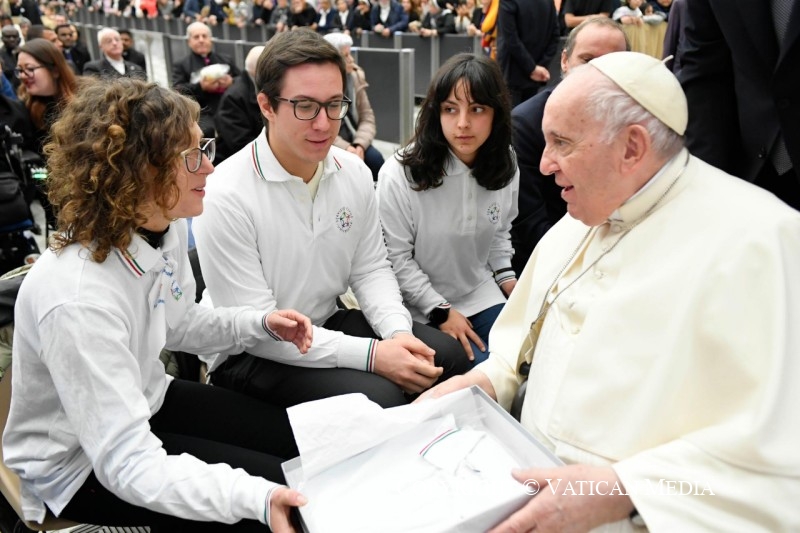
We have done discernment, consolation and desolation; we have chosen something … everything is going well, but now, vigilance: the attitude of vigilance. Because in effect there is a risk, and it is that the “spoilsport”, that is, the Evil One, can ruin everything, making us go back to the beginning, indeed, in an even worse condition. And this happens, so we must be attentive and vigilant. This is why it is indispensable to be vigilant. Therefore, today it seemed appropriate to emphasize this attitude, which we all need for the discernment process to be successful and stay that way.
Indeed, in his preaching Jesus insists a great deal on the fact that the good disciple is vigilant, does not slumber, does not let himself become too self-assured when things go well, but remains alert and ready to do his duty.
For example, in the Gospel of Luke, Jesus says: “Let your loins be girded and your lamps burning, and be like men who are waiting for their master to come home from the marriage feast, so that they may open to him at once when he comes and knocks. Blessed are those servants whom the master finds awake when he comes” (12:35-37).

Keeping watch to safeguard our heart and to understand what is happening inside it. This is the frame of mind of the Christians who await the final coming of the Lord; but it can be understood also as the normal attitude to have in the conduct of life, so that our good choices, taken at times after challenging discernment, may proceed in a persevering and consistent manner, and bear fruit.
If vigilance is lacking, there is, as we were saying, a very high risk that all will be lost. It is a danger not of a psychological order, no, but of a spiritual order, a real snare of the evil spirit. Indeed, he awaits precisely the moment in which we are too sure of ourselves, and this is the danger: “But I am sure of myself, I have won, now I am fine…” – this is the moment he is waiting for, when everything is going well, when things are going “swimmingly” and we “have the wind in ours sails”. Indeed, in the short Gospel parable we heard, it is said that the unclean spirit, when it returns to the house from where it left, “finds it empty, swept, and put in order” (Mt 12:44), he finds it nicely prepared, doesn’t he? Everything is in its place, everything is in order, but where is the master of the house? He is not there. There is no-one keeping watch over it and guarding it. This is the problem. The master of the house is not home, he left, he was distracted, I don’t know; or he is at home but has fallen asleep, and therefore it is as though he were not there. He is not vigilant, he is not alert, because he is too sure of himself and has lost the humility to safeguard his own heart. We must always safeguard our home, our heart and not be distracted and go away… because the problem lies here, as the Parable said.
So, the evil spirit can take advantage of this and return to that house. The Gospel says, however, that he does not return alone, but along with “seven other spirits more evil than himself” (v. 45). A company of evil-doers, a gang of delinquents. But how is it possible, we wonder, for them to enter undisturbed? How come the master does not notice? Was he not so good at discerning and banishing them? Did he not receive compliments from his friends and neighbours for that house, so beautiful and elegant, so tidy and clean? The house of the heart, isn’t it? Yes, but perhaps precisely because of this he had fallen too much in love with the house, that is, with himself, and had stopped waiting for the Lord, waiting for the coming of the Bridegroom; perhaps for fear of ruining that order he no longer welcomed anyone, he did not invite the poor, the homeless, those who disturbed… One thing is certain: here bad pride is involved, the presumption of being right, of being good, of being in order. Very often we hear someone say: “Yes, I was bad before, I converted and now, now my house is in order thanks to God, you can rest assured…”. When we trust too much in ourselves and not in God’s grace, then the Evil One finds the door open. So, he organizes the expedition and takes possession of that house. And Jesus concludes: “The last state of that man becomes worse than the first” (v. 45).

But doesn’t the master notice? No, because these are polite demons: they come in without you noticing, they knock on the door, they are polite. “No okay, go, go, come in…” and then eventually they take command of your soul. Beware of these little devils, these demons… the devil is polite, when he pretends to be a great gentleman, isn’t he? For he enters with ours to come out with his. Safeguard the house from this deception, that of polite demons. And spiritual worldliness takes this route, always.
Dear brothers and sisters, it seems impossible but it is so. Many times we lose, many times we are defeated in battles, because of this lack of vigilance. Very often, perhaps, the Lord has given so many graces, many graces, and in the end, we are unable to persevere in this grace and we lose everything, because we lack vigilance: we have not guarded the doors. And then we have been deceived by someone who comes along, polite, he goes in and, hello… The devil has these things. Anyone can also verify this by thinking back to their own personal history. It is not enough to carry out good discernment and to make a good choice.
No, it is not enough: we must remain vigilant, safeguard this grace that God has given us, but keep watch, because you can say to me: “But when I see some disorder, I realize straight away that it is the devil, that it is temptation…”. Yes, but this time he comes disguised as an angel: the devil knows how to dress up as an angel, he enters with courteous words, and he convinces you, and in the end, it is worse than at the beginning… We need to stay vigilant, keep watch over the heart. If I were to ask each one of you today, and also myself, “What is happening in your heart?”, perhaps we would not know how to say everything; we would say one or two things, but not everything. Keep watch over the heart, because vigilance is a sign of wisdom, it is above all a sign of humility, because we are afraid to fall, and humility is the high road of Christian life. Thank you.
Monday, December 12, 2022
Francis: The Pope Who Wept before the Virgin (and Before the Eyes of All) - ZENIT - English
Francis: The Pope Who Wept before the Virgin (and Before the Eyes of All) - ZENIT - English: What do the tears of a Pope say to us and why did they move us so much? Perhaps because the Holy Father has reflected, and without a script, something so close to the experience of many of us.
Wednesday, November 9, 2022
Pope Tells Young People in Bahrain How to Care for the Heart and Not Go Through Life as Tourists
Pope Tells Young People in Bahrain How to Care for the Heart and Not Go Through Life as Tourists - ZENIT - English https://zenit.org/2022/11/05/pope-tells-young-people-in-bahrain-how-to-care-for-the-heart-and-not-go-through-life-as-tourists/?eti=7442
Saturday, November 5, 2022
Pope at Mass in Bahrain: Love always and love everyone
Pope at Mass in Bahrain: Love always and love everyone
Pope Francis presides at Mass in Bahrain's National Stadium on the third day of his 39th Apostolic Journey abroad, and urges the faithful to shatter the chains of evil and break the spiral of violence by loving everyone, always.
By Francesca Merlo
Pope Francis started his third day in Bahrain by celebrating Holy Mass in the National Stadium. In his homily, the Holy Father reminded all those gathered of the prophet Isaiah's words about the Messiah whom God will raise up: “His power shall grow continually, and there shall be endless peace”.
He noted that, although this sounds like a contradiction, as "we often notice that the more power is sought, the more peace is threatened", the prophet announces the extraordinary news that "the Messiah to come will indeed be powerful, not in the manner of a commander who wages war and rules over others, but as the 'Prince of Peace' who reconciles people with God and with one another."
The Holy Father then asked those present to stop and reflect on the phrase "to love always and to love everyone".
Love always
Jesus’ words today invite us to love always, said the Pope. "He knows that within our relationships there is a daily struggle between love and hatred", and in this way, too, within our hearts "there is a daily clash between light and darkness". With this in mind, the Pope noted that Jesus suffers when He sees, all around the world, "ways of exercising power that feed on oppression and violence, seeking to expand their own space by restricting that of others, imposing their own domination and restricting basic freedoms, and in this way oppressing the weak".
The Pope went on to ask what we are to do in such situations, before responding that "the Lord asks of us not to dream idealistically of a world of fraternity, but to choose, starting with ourselves, to practice universal fraternity, concretely and courageously, persevering in good even when evil is done to us, breaking the spiral of vengeance, disarming violence, demilitarizing the heart".

We must always strive for peace, said the Pope, adding that "peace cannot be restored if a harsh word is answered with an even harsher one, if one slap leads to another."
Love everyone
Pope Francis went on, then, to focus on the concept of loving everyone. He noted that although we can be committed to loving, it is not enough if we restrict this commitment to our close circles. "If we want to be children of the Father and build a world of brothers and sisters, the real challenge is to learn how to love everyone, even our enemies."
Bringing his homily to a close, Pope Francis stressed that the power of Jesus is love, and He gives us the power to love in this way, a power which "to us, seems superhuman", he said.
Finally, the Pope thanked all those present in Bahrain's National Stadium and assured them that with him he brought the affection and closeness of the universal Church, "which looks to you and embraces you, which loves you and encourages you".
The Land of the Tree of Life, the Pope and Freedom of Worship: Pope’s Address in Bahrain
The Land of the Tree of Life, the Pope and Freedom of Worship: Pope’s Address in Bahrain - ZENIT - English https://zenit.org/2022/11/04/the-land-of-the-tree-of-life-the-pope-and-freedom-of-worship-popes-address-in-bahrain/?eti=7390
Subscribe to:
Posts (Atom)